
What to see at Piazza della Signoria
Six stops that tell the story of Florence's political and artistic drawing room, from Palazzo Vecchio to the Uffizi.
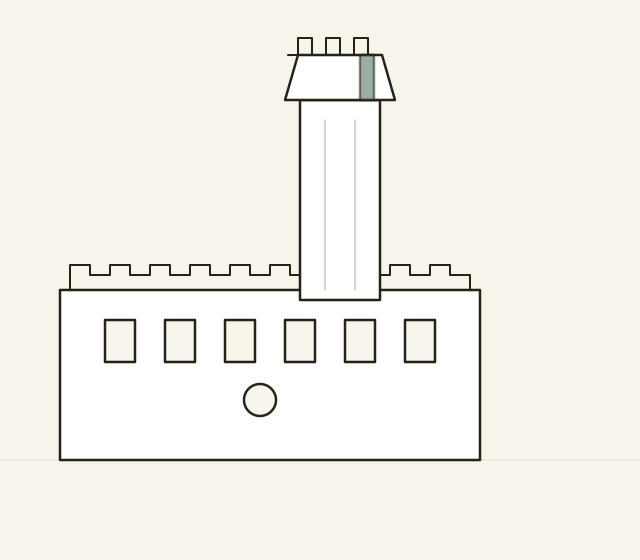
Palazzo Vecchio
A fortress-palace built from 1299, the historic seat of the Florentine Signoria and residence of Cosimo I de' Medici from 1540. It's still Florence's city hall today, alongside housing the Civic Museums.
Torre di Arnolfo
94 metres tall, deliberately off-axis from the body of the palace — a detail that's easy to spot when looking up from below. From the terrace at the top you get one of the widest views over Florence's historic centre.
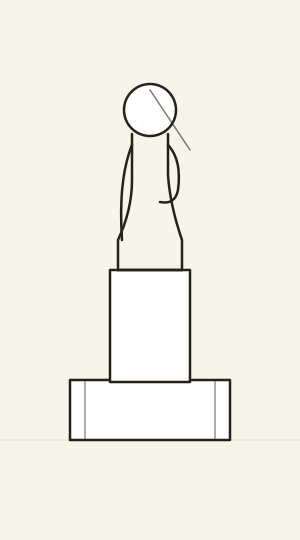
The David (copy)
Since 1910, a marble copy has marked the exact spot where Michelangelo's original stood for over three centuries, from 1504. The real work has been kept at the Galleria dell'Accademia since 1873.
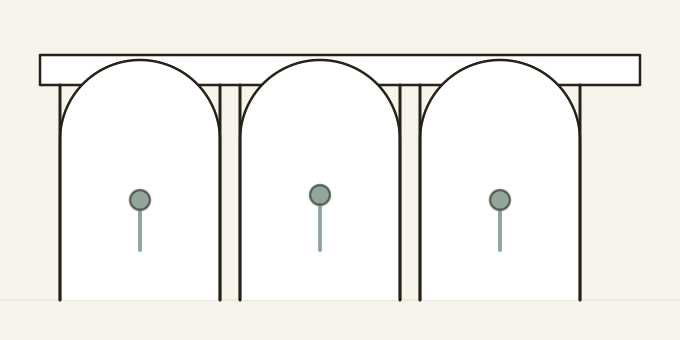
Loggia dei Lanzi
Three wide 14th-century arches turned into an open-air sculpture gallery. Home to Benvenuto Cellini's Perseus with the Head of Medusa and Giambologna's Rape of the Sabine Women, free to view at any time.
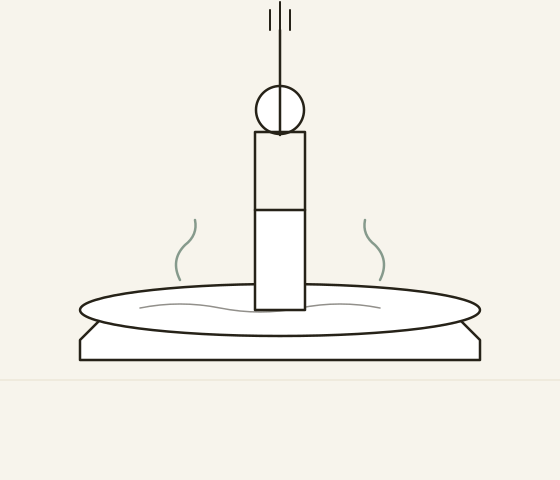
Fountain of Neptune
The work of Bartolomeo Ammannati (1575), nicknamed "il Biancone" by Florentines for the sheer mass of white marble. The colossal Neptune is surrounded by bronze satyrs and sea deities.
The Uffizi Backdrop
The U-shaped courtyard of the Uffizi Gallery opens right onto the south side of the square, towards the Arno. The niches on the façade hold statues of great Florentines: Dante, Petrarch, Leonardo, Michelangelo.
Want to skip the queues at Palazzo Vecchio?
Entry to the Torre di Arnolfo is capped for safety reasons — booking ahead is worthwhile, especially in high season.
See tickets and experiences
Space reserved for local operators.